Upper Big Blue NRD Supports Private Well Safety
Originally published in the Aurora News-Register on August 26, 2026. Reprinted with permission.
Article written by Elizabeth Hunter, Aurora News-Register
Without frequent testing of wells, private owners in Nebraska are at risk of drinking water contaminated with nitrates and harmful bacteria. With that in mind, the Upper Big Blue Natural Resources District (UBBNRD) offers assistance to private well owners in testing their water and enrolling them in the Point-of-Use Reverse Osmosis Water Filtration System Pilot Program.
"Anytime your water is 10 parts per million (ppm) or higher in nitrates, it's recommended that you have a reverse osmosis (RO) system," said Terry Julesgard, water department manager for Upper Big Blue in York.
Julesgard encourages private well owners to test their wells regularly.
"An individual owner on an acreage really should have their water tested at least once a year," Julesgard said. "Unless they're in a really low area, then every couple of years is fine. For the producers, we encourage them to take credit for all of their available nitrogen in the soil before they make an application of their nitrogen fertilizer to make sure that they're using it up and not just leaching it through the soil profile."
Julesgard said consumption of nitrates can be dangerous to pregnant women and the elderly and long-term consumption of nitrates can lead to higher risks of cancers and birth defects. Infants are at high risk of getting methemoglobinemia, also known as blue baby syndrome, which can become a life-threatening condition that depletes oxygen from the blood, causing skin to turn blue.
Bacteria, such as Escherichia coli (E. coli), can cause infections leading to stomach cramps, fever, vomiting and diarrhea.
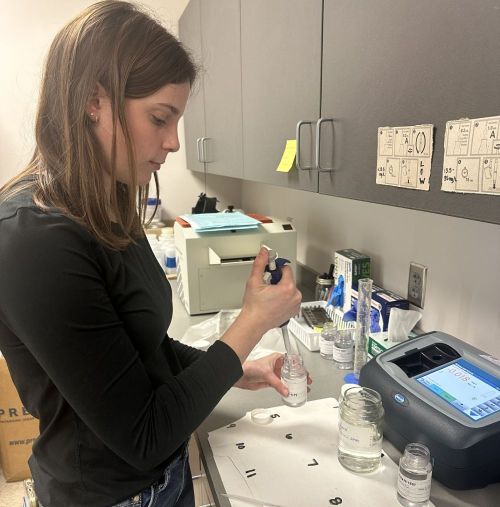
In order to complete the test, owners will need to collect a well water sample from a hydrant or faucet connected to a waterline closest to the well.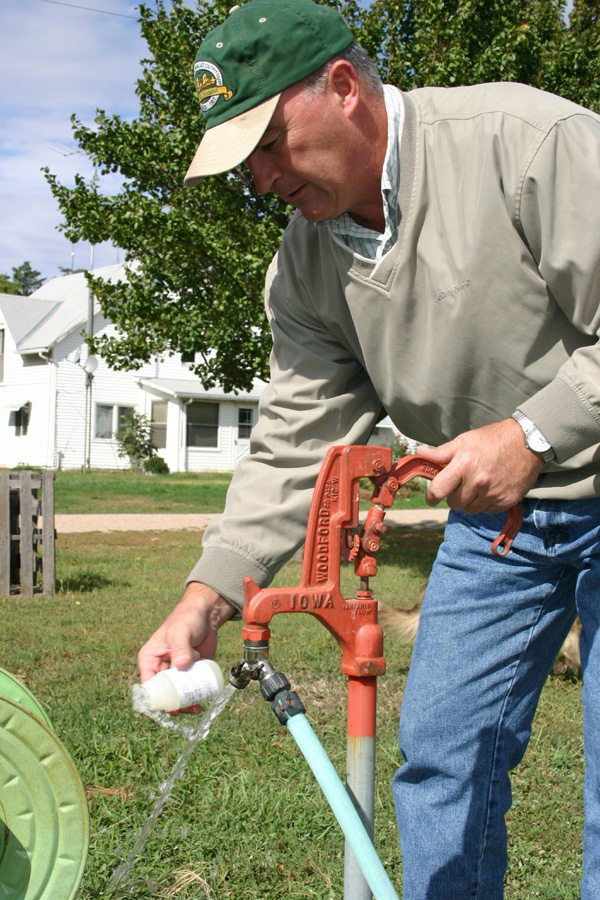
"If you're doing just the nitrate test, we just need a sample from a clean container," Julesgard said. "That can be a rinsed-out usedwater bottle or we do have containers here that we can provide for them if they want to use that. And if they want to have a bacteria test, that does take a special bottle and they would have to pick that up here at the office (located at 319 East 25th St. in York.)"
The sterile bottle provided by NRD cannot be opened until a well water sample is ready to be collected. The samples will need to be collected at a hydrant or faucet connected to the waterline closest to the well after the water has run for at least 10 minutes.
Julesgard also said that NRD does annual testing for irrigation wells across the district.
"We monitor that and let producers know what the levels are," he said. "There's multiple different cost-share programs that are available for the producers to help improve their soil health, so they can reduce their nitrogen leaching."
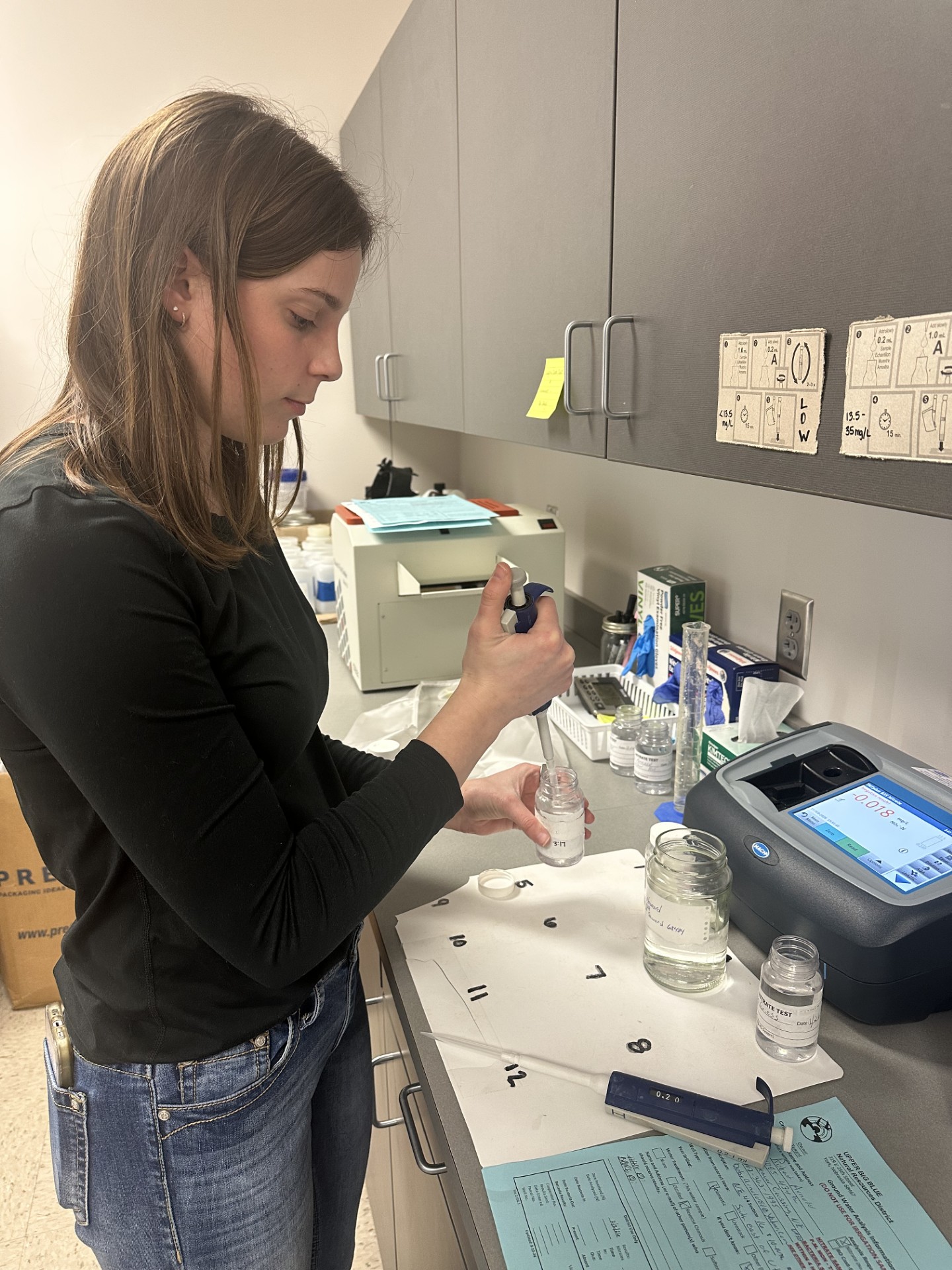
The time it takes to receive results depends on whether owners are testing for nitrates or bacteria.
"For the nitrates, that is just a matter of a half hour or so," Julesgard said, "As for the bacteria test, that has to incubate for 24 hours, so we wouldn't have those results 24 hours from the time we receive it until we can get the results."
If a well's water is 10 ppm or higher, Julesgard said NRD will help get owners started in setting up an RO system.
"We would give them an application for a reverse osmosis system," he said. "They can complete that and what our cost-share is on that is that we will pay 75 percent of the actual cost up to $500."
Under the district cost-share programs, Julesgard said RO systems must be installed by a licensed plumber.
When in operation, RO systems can remove more than 98 percent of nitrates from well water, but Julesgard said they need regular maintenance.
"The filters will need to be changed according to the manufacturer's recommendations," he said. "We recommend bringing a water sample of both the treated and not treated water once a year. That way they can be sure their systems are working."
Julesgard also encourages those who are in ag production to keep track of nitrogen management.
"If one is on an acreage and has production ag all around the building site, the only thing one can do is encourage producers to use their best management practices in regard to nitrogen management and application," he said. "As for other well contaminations, one should periodically visually inspect the well itself to make sure all fittings are tight and no damage has occurred to the above-ground portion of the well."
Julesgard said that NRD offers flyers with information on testing and treatment at the office.
"If anybody's interested, we can send those to them," he said.
More information about the RO system can also be found on Upper Big Blue's website at upperbigblue.org/RO.